Free SOP Templates (Standard Operating Procedure)
Start creating standard operating procedure documents for your business.
How It Works
Choose Your Form
Select your type or state to begin
Answer Simple Questions
Complete our guided questionnaire in minutes
Download Your Document
Download and print your custom form for free (Word & PDF)
Written by
Legal Team
Legally Reviewed by
Attorney Review Board
Last Updated December 2025
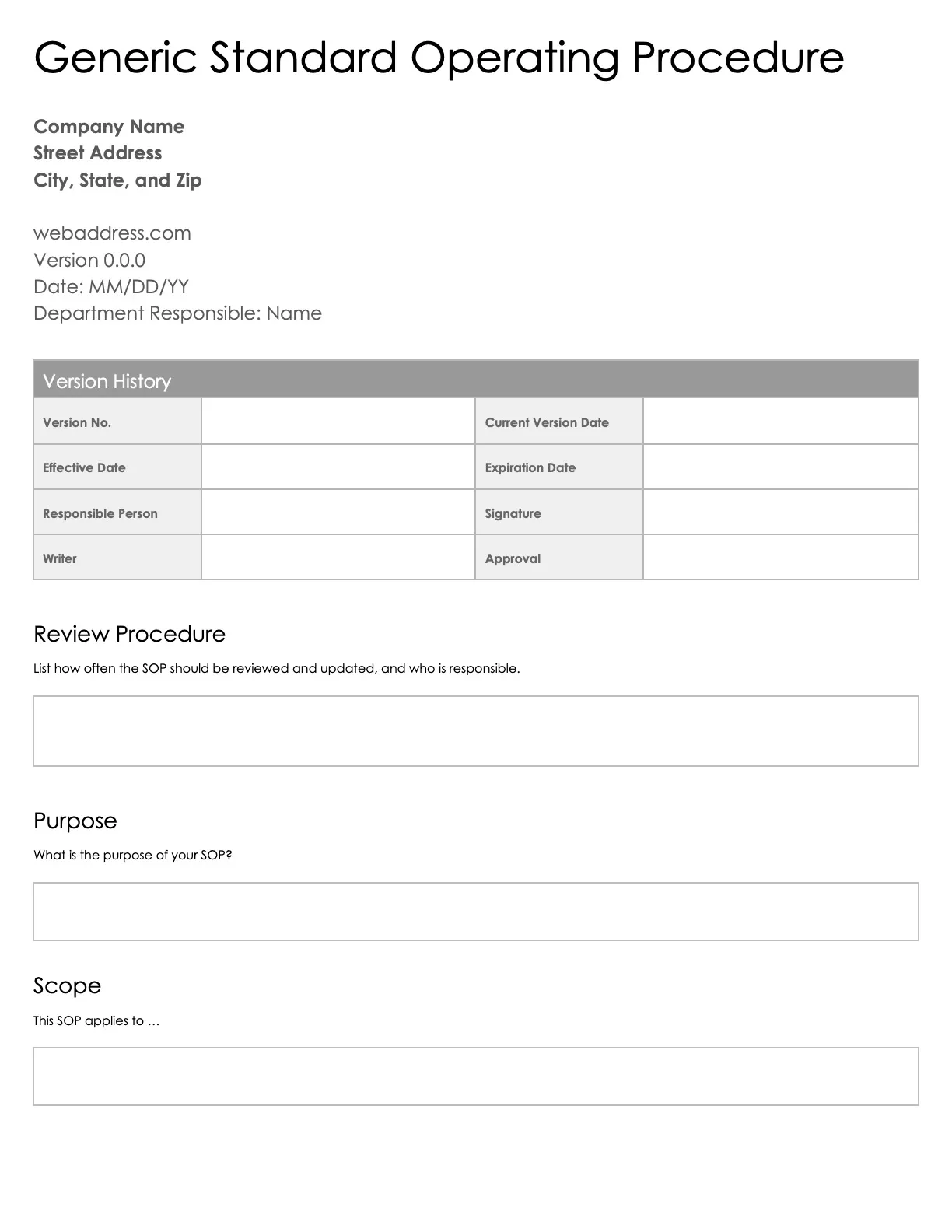
A standard operating procedure (SOP) is a step-by-step document that guides employees through routine tasks and processes. Well-written SOPs ensure consistency, reduce errors, and maintain quality standards across your organization.
SOPs also support regulatory compliance and preserve institutional knowledge. By documenting how critical tasks should be performed, organizations can train new employees faster and ensure processes run smoothly even when key staff members are unavailable.
What Is an SOP?
A standard operating procedure (SOP) is a detailed document that outlines the specific steps required to complete a task or process within an organization.
SOPs serve as authoritative guidelines that ensure tasks are performed consistently, safely, and in compliance with regulatory requirements. They document best practices and institutional knowledge in a format that can be easily followed and referenced.
Employees who have access to well-written SOPs can perform their duties with confidence, knowing they are following established and approved procedures.
This reduces variability in outcomes and minimizes errors that can occur when processes are performed from memory or personal interpretation.
Organizations benefit from SOPs by maintaining quality standards, streamlining training, and creating accountability. When procedures are documented, it becomes easier to identify inefficiencies and implement improvements.
Importance of SOPs
Standard operating procedures should be documented for all critical business processes. A well-crafted SOP can provide the following advantages:
Ensures Consistency and Quality
SOPs provide step-by-step instructions that ensure tasks are performed the same way every time, regardless of who performs them. This consistency leads to predictable, high-quality outcomes and reduces variability in products or services. When processes are standardized, organizations can maintain quality standards and meet customer expectations reliably.
Supports Regulatory Compliance
Many industries require documented procedures to meet regulatory standards. SOPs provide evidence that your organization follows approved methods and maintains compliance with industry regulations. During audits, SOPs demonstrate that proper procedures are in place and being followed, which can be critical for certifications and avoiding penalties.
Reduces Training Time
Well-documented SOPs serve as training materials for new employees, allowing them to learn processes quickly and accurately. Instead of relying solely on verbal instructions or shadowing, new team members can reference SOPs to understand exactly how tasks should be completed. This accelerates onboarding and ensures consistent training across the organization.
Minimizes Errors and Rework
By providing clear, detailed instructions, SOPs reduce the likelihood of mistakes that can lead to costly rework, delays, or safety incidents. When employees follow documented procedures, they are less likely to skip steps or make assumptions that could compromise quality or safety.
Preserves Institutional Knowledge
SOPs capture the expertise and best practices of experienced employees, ensuring this knowledge is retained when staff members leave or transition to new roles. Without documented procedures, critical knowledge can be lost, forcing organizations to reinvent processes or risk decreased efficiency.
Enables Process Improvement
When procedures are documented, it becomes easier to identify inefficiencies and implement improvements. SOPs provide a baseline for measuring performance and testing changes. Teams can analyze documented procedures to find bottlenecks, eliminate unnecessary steps, and optimize workflows.
Creates Accountability
SOPs clearly define roles, responsibilities, and expected outcomes for each process. This clarity helps establish accountability and makes it easier to identify where issues occur when problems arise. When everyone understands their responsibilities, teams can work more effectively and resolve issues faster.
How to Create an Effective SOP
An effective SOP can improve operational efficiency, ensure quality outcomes, and reduce errors. The following steps outline how to create SOPs tailored to your organization's needs:
Step 1 - Define the Scope and Purpose
Begin by clearly identifying which process or task the SOP will cover and why it needs to be documented. Consider who will use the SOP, what outcomes it should achieve, and how it fits into broader organizational workflows. A well-defined scope prevents the SOP from becoming too broad or too narrow to be useful.
Step 2 - Gather Information from Subject Matter Experts
Interview the employees who perform the task regularly to understand the current process, including any variations or exceptions. Document best practices, common challenges, and tips that experienced workers have developed. This ensures your SOP captures real-world knowledge rather than theoretical procedures.
Step 3 - Write Clear, Step-by-Step Instructions
Break down the process into sequential steps that are easy to follow. Use simple, direct language and avoid jargon that may confuse new users. Include specific details such as required materials, equipment settings, timing, and quality checkpoints. Number each step and use visual aids like diagrams or photos where helpful.
Step 4 - Include Safety and Compliance Requirements
Document any safety precautions, personal protective equipment requirements, or regulatory compliance steps that must be followed. Reference relevant industry standards, regulations, or internal policies. Highlight critical safety information prominently so it cannot be overlooked.
Step 5 - Test and Validate the SOP
Have someone unfamiliar with the process attempt to complete the task using only the SOP. Observe where they struggle or have questions, and revise the document accordingly. This testing phase is crucial for identifying gaps, unclear instructions, or missing steps before the SOP is finalized.
Step 6 - Implement, Train, and Maintain
Roll out the SOP with proper training to ensure all relevant team members understand how to use it. Establish a review schedule to keep the SOP current with process changes, equipment updates, or regulatory requirements. Assign ownership for maintaining each SOP and create a system for collecting feedback and improvement suggestions.